 Institute of Advanced Investment Management
Matti Suominen and Erik Hjalmarsson
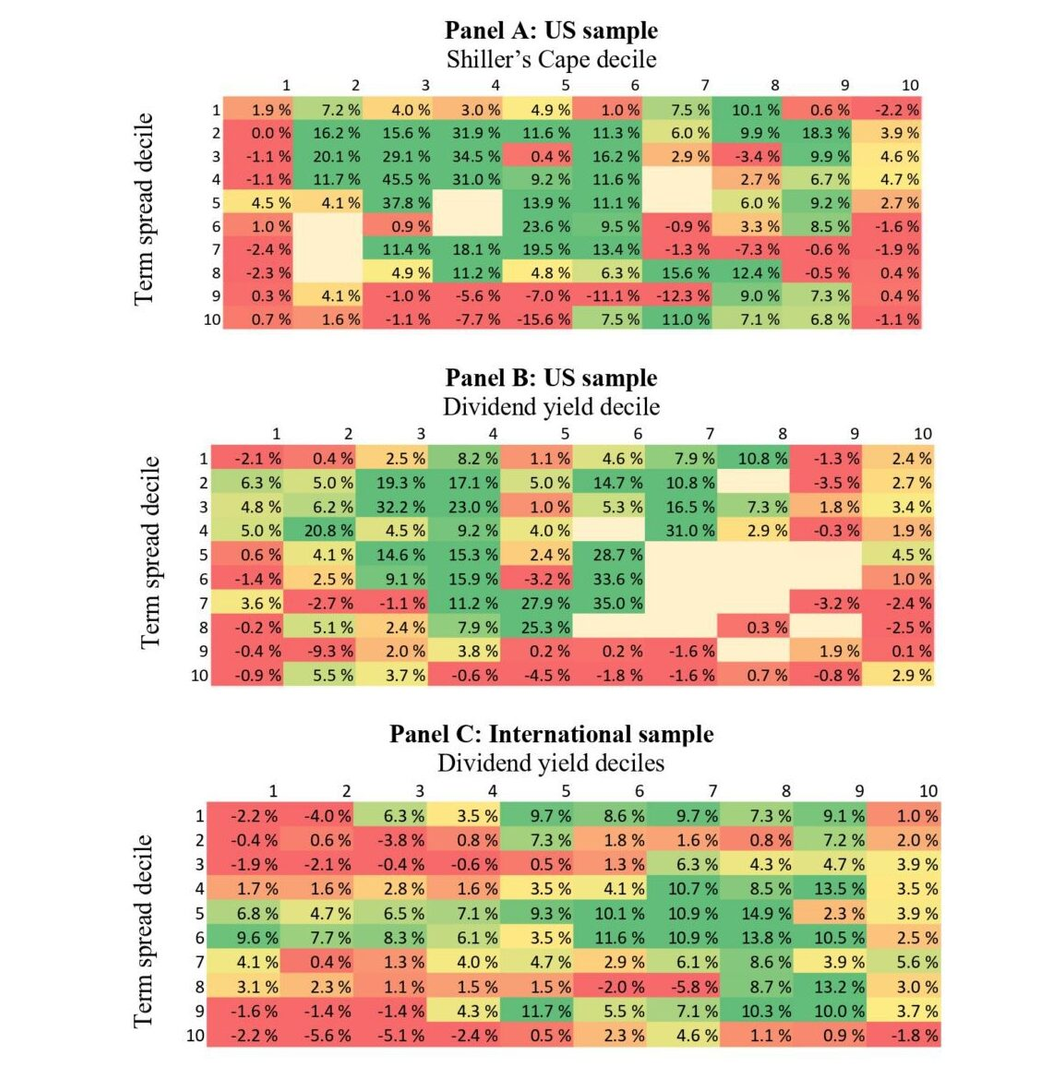
Time-series momentum is one of the most reliable and heavily backtested anomalies in quantitative finance, serving as a foundational alpha source for managed futures and trend-following strategies. This paper uncovers a structural vulnerability that every practitioner must account for: momentum returns persist reliably during normal business cycles, but break down sharply and reverse whe
n market valuations reach historical extremes. The authors map this behavior across three primary valuation anchors tied to the macroeconomy: Shiller’s CAPE ratio, aggregate dividend yields, and the government bond yield-curve slope.
The core finding is that time-series momentum delivers robust returns during mid-valuation regimes, but as these fundamental metrics stretch toward their 10- or 20-year historical extremes, underlying asset prices begin to reflect macroeconomic turning points, causing established trends to fracture and reverse sharply. The effect is not marginal: controlling for equity market return reversals near historical valuation extremes increases the R² of a predictive regression of equity market returns by up to 110%, and boosts the R² of a predictive regression of time-series momentum returns by an astonishing 550%. This breakdown occurs regardless of whether valuations are extremely high or low, or whether the prevailing momentum signal is positive or negative.
For practitioners, the takeaway is that momentum is not a purely behavioral phenomenon to be traded in isolation. It is intrinsically linked to fundamental valuation anchors and macro regimes. Systematic trend-followers can dramatically minimize tail risk and optimize alpha generation by implementing a regime-conditioned overlay that dynamically scales down risk exposure or prepares for reversals when valuation metrics pierce their 10- to 20-year historical boundaries.
Link to full article: https://papers.ssrn.com/sol3/papers.cfm?abstract_id=6867878